Blue Light Signal Transduction
Plants sense and utilize natural blue light signals to regulate their growth and development through blue light receptors. Cryptochromes (CRYs) are the only class of plant blue light receptors with homologous proteins present in animals and microorganisms. Blue light receptors, such as CRYs, mediate various developmental processes in plants, including hypocotyl elongation, flowering, and circadian rhythm regulation. The research team, led by Dr. Hongtao Liu, identified the first protein, CIB1, that binds CRY in a blue light-dependent manner to transduce signals, and elucidated the CRY-CIB1 signaling pathway regulating flowering time (Science, 2008; Current Biology, 2011).
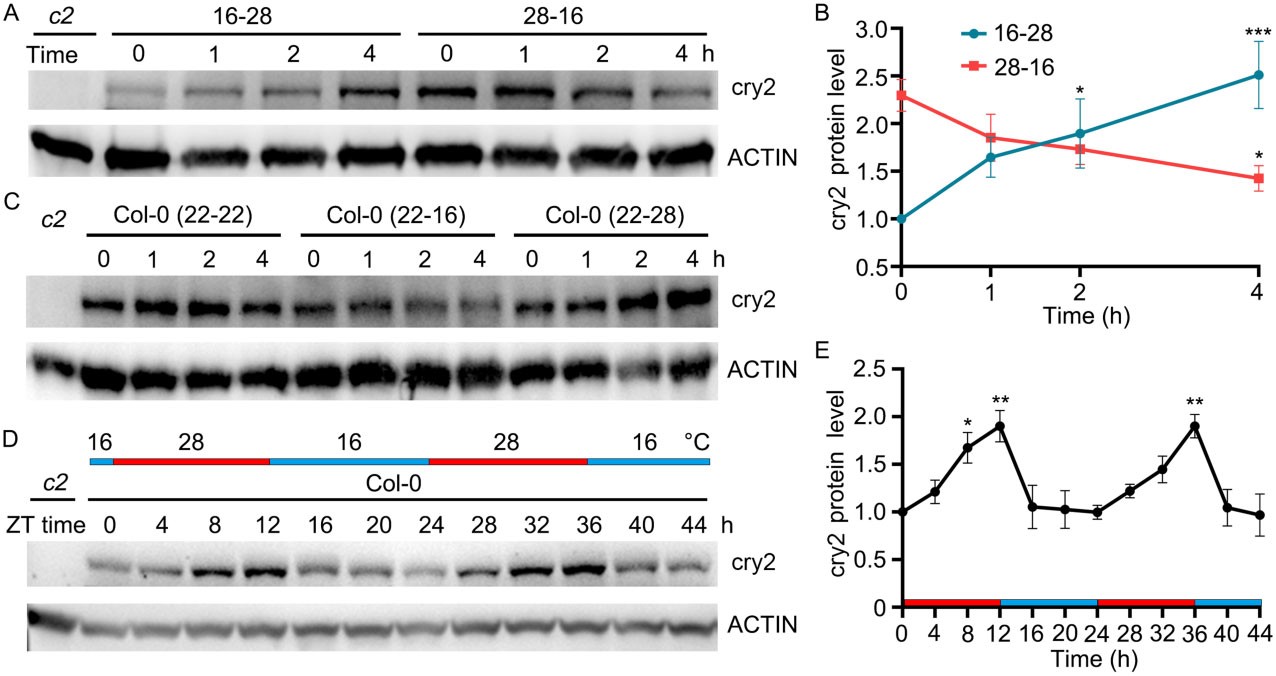
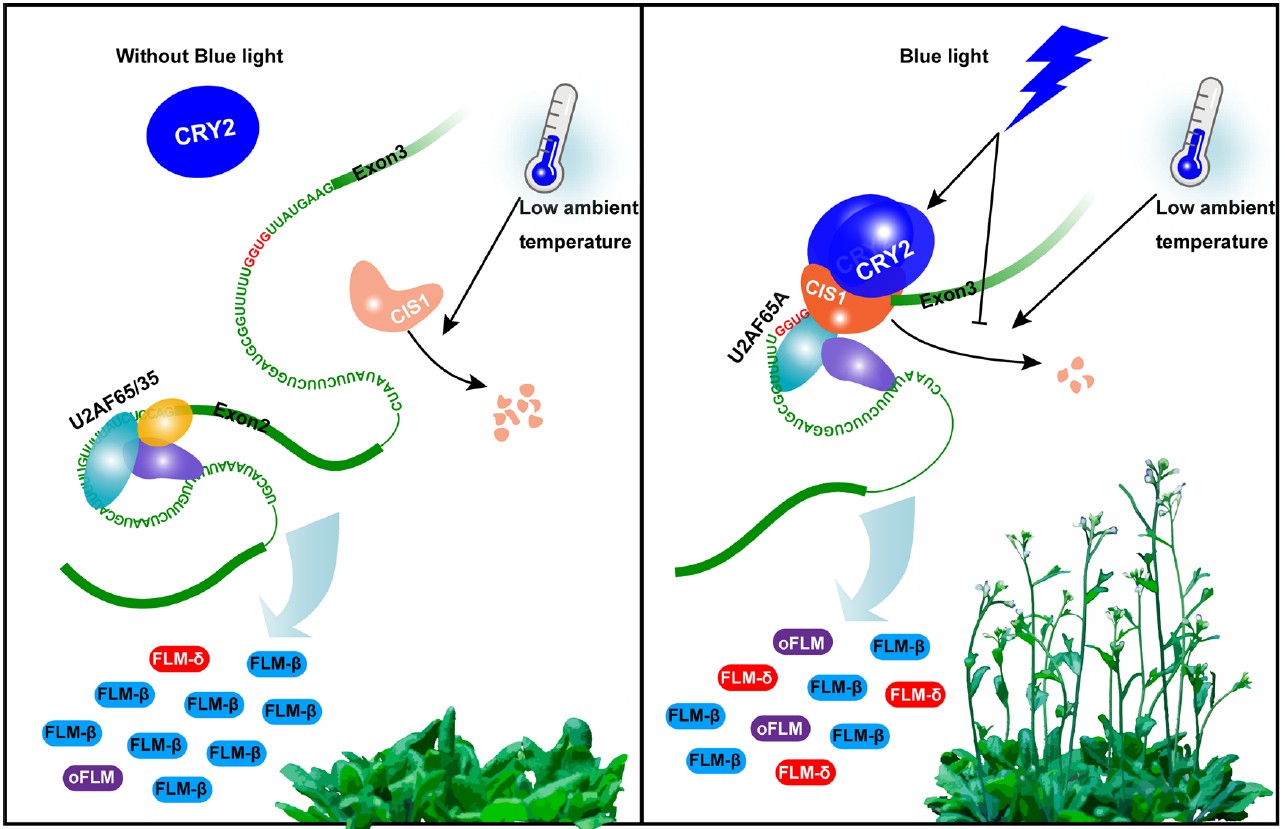
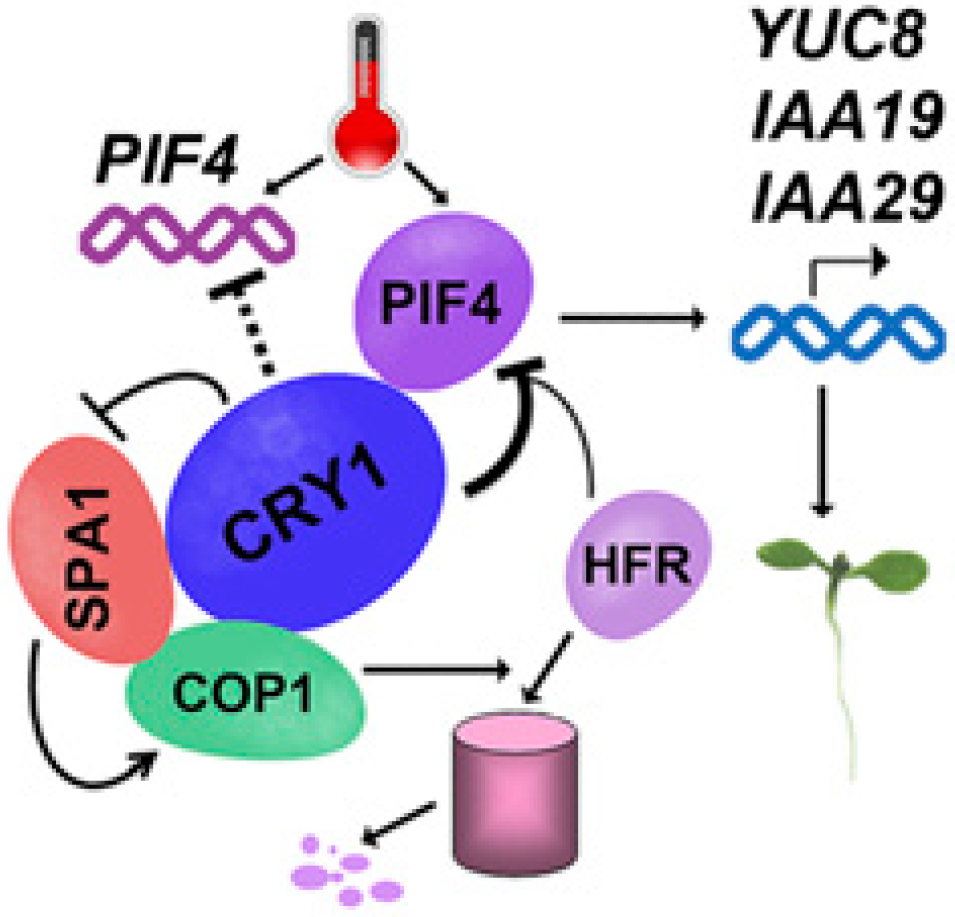
Since the lab’s establishment in 2011, we have been dedicated to unraveling CRY-mediated blue light signaling pathways. We have built a comprehensive experimental platform encompassing biochemistry, molecular biology, genetics, and genomics. Our significant findings include CRY-regulated flowering (PNAS, 2013; PLoS Genetics, 2013; EMBO Reports, 2018; New Phytologist, 2019), CRY’s role in coordinating light and temperature effects on plant growth and development (PNAS, 2016; The Plant Cell, 2016, 2021; Nature Communications, 2022), and the mechanism of protein conformational changes in CRY blue light responses (Nature Structural & Molecular Biology, 2020).
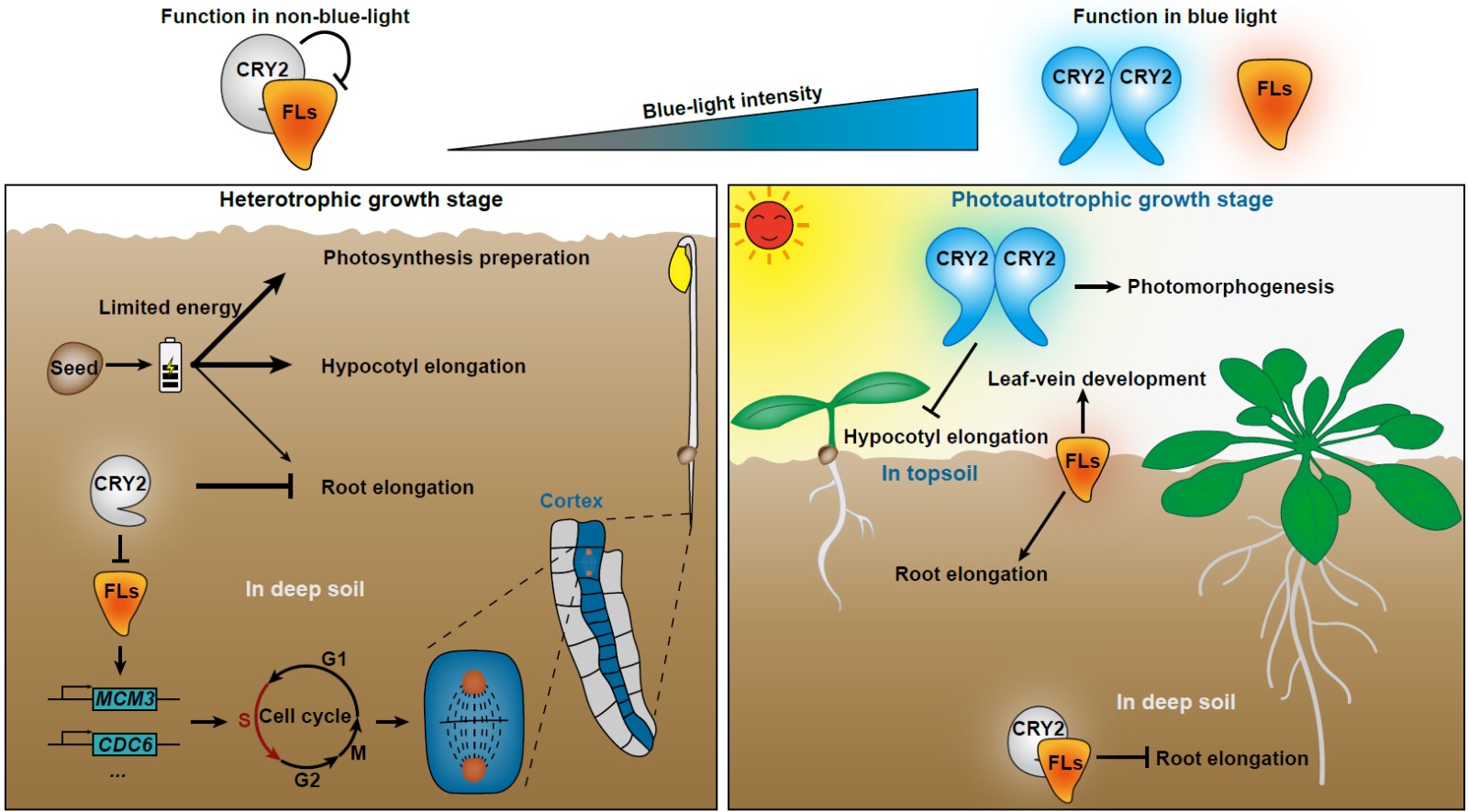
In 2025, our lab achieved milestone breakthroughs in blue light signaling research. First, we discovered that CRY1 plays a critical role in stomatal immunity, serving as a key gene balancing photosynthesis and plant immune responses (Cell Host & Microbe, 2025). Additionally, we found that CRY2 remains functionally active in darkness, revealing that blue light not only activates but also deactivates CRY. Furthermore, we identified proteins that bind CRY in a blue light-inhibitory manner, fundamentally challenging the classical photoreceptor functional model (Cell, 2025).
These advances in CRY-mediated blue light signal transduction provide a robust theoretical foundation for future applications. They pave the way for leveraging blue light to regulate crop growth and development, improve crop architecture, and enhance and stabilize agricultural yield.